







The expression “Good News, no news!” is an old joke that has been used in the media from times ever. What it says is that the human being is always looking to feel better off than somebody else. It is one’s way to compensate from one’s frustrations at not achieving some goal. While good news generates positive emotions of joy, trust and anticipation, they tend to reach affect positively only the portion of society that has reached the stage of self -actualization in the Maslow Pyramid.
Maslow himself estimated that only two percent of people would reach the full state of self-actualization. It is only when successful people can detach themselves from their success that they can reach this stage of independence and can realize their more altruistic inner goals. A personality like Bill Gates might be an example, although there are many unknown people that are radiating without the exposure from the media.
In the echelon below, successful people have throughout history sought to underline their successes by statements such as grand mansions, huge celebrations and an abundance of the most luxury items available at the time. Predictably, the post-war successive booms led to social elites such as the “cafe society”, the “jet set” and later on, as money changed hands and the number of super rich exploded to a multitude of status symbols like yachts, private jets, humongous mansions or apartments, super cars costing many times more than an average dwelling and of course art works at values inflated beyond any reasonable expectation.
But they were not alone.
The internet development enabled the instantaneous emergence of large number mega millionaires and billionaires who managed the art of stats display to a degree not reached since the “robber barons” days at the end of the 19th century. Their wealth was not built on finance, manufacturing, steel, railroad or oil, but on enabling rapid information and exchange across a much larger younger population eager to emerge out of anonymity. The social media revolution borne out of colleges engulfed not only a wave of youngsters, but people of almost any age that could remain always connected to their social or age group. Platforms such as Instagram enabled people to parade themselves digitally under most advantageous circumstances, creating a most desirable image of themselves in their effort to improve their perceived social status. These platforms were ideally suited to fulfill the intermediate echelons of the Maslow Pyramid which encompass the needs for esteem and those for belonging and love needs, the groups that we classed in or previous article “Social Media, Psychology and Politics” as psychologically vulnerable. Although when used with positive objectives, social media are a wonderful tool for humanity. Unfortunately, they have been harnessed negatively to deform truth and spread false information to a degree that certain elements of the population have been so radicalized, so as to become prisoners of an unreal word and threaten the proper interaction of political groups in a balanced mode. An MIT study revealed that false news on-line travels “farther, faster, deeper, and more broadly than the truth”, and that false news on line reached people six times faster than the truth. As it was novel information, it was far more likely to be shared with the truth.
How did Facebook originally conceived as a consumer data mining enterprise that would secure income from advertisers and let users a free ride, became the prey of nefarious activities? We have to go back to human nature and the make-up of its psychological diversity.
Interestingly, the Buddhist philosophy concentrates on negative proclivities and the need to overcome them. Although we describe it in a simplistic manner, it will help the reader to get an inside on the important foundations of this philosophy. The starting point is the concept of two opposite feelings: distress (anger) and contentment (calmness), from which several predispositions emerge. On the negative side, we have tendencies for greed, aggressiveness, aversion, untruthfulness, ignorance or indifference. On the positive side, we have desires for non attachment, non aggression, equanimity, shame at doing evil, conscientiousness. With faith and energy we can overcome the bad. What is interesting is that many of the words used to represent the good inclinations start with the equivalent of the letter “A” which means “non” Alobha – non-attachment, Adveṣa – non-aggression, Ahiṃsā – non-injuriousness, Apramāda – conscientiousness as opposed to Pramāda – heedlessness, carelessness, unconcern. This would lead one to conclude that in their viewpoint, the quest is to reach the good rather than to sink into the bad which has a strong pull.
For over a century, advertisers have been masters at using human psychology to promote their clients’ products. They understood that arousal of feelings and emotions around a product is more important than nuts and ball description. They provoke positive emotions by linking the use of a product to a more enjoyable experience, suggesting an array of elements such as enhancement of friendships, easier participation in groups, pride, success. The promote empathy, invoke scarcity and rely in authority cajoling the customer into a feeling of security.
In their quest for more votes and money, Politicians would soon catch on the marketeers and use political advertising in various media from posters radio and television. The first attempt to use voter digital mobilization occurred during the presidential democratic primaries of 2004 for the Howard Dean campaign. It worked well until Dean, after a primary exulted in a powerful roar that was deemed at the time as unfit for a presidential candidate (although in modern Trump times, it would have sounded emanating from a wimp). It destroyed his march to the candidacy that had been spectacular up to that time. the programmers that had been working on the Dean web campaign purchased after the collapse the rights to the software they had helped write and founded Blue State Digital to create a web activist entity to promote voter’s engagement through social media. The lessons they had learned was that it was crucial to combine the various data bases available in a single data base, so as to generate maximum voters’ participation in the campaign. For years later, at the age of 25 one of them Ropas was engaged by Obama to form his New Media Department which was responsible for everything related to the Internet beyond the technical areas, including all of the organizing, communications, and fundraising aspects of what was happening online. Obama’s campaign was not only asking voters for votes and money, but for a third element: “TIME”, which meant involvement and engagement. This approach worked brilliantly in the first campaign as it was so innovative. On the second campaign it outperformed the Republican campaign that had also used social media extensively but not as efficiently.
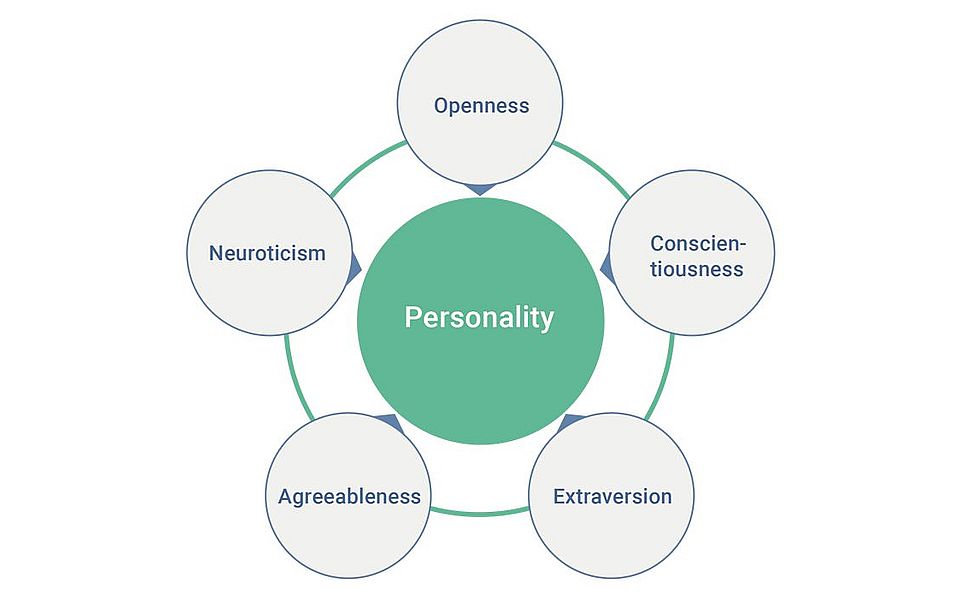
Things were going to change with the 2016 presidential campaign in particular in the Republican camp. The 4th dimension was psycho metric targeting the swing voters, creating a double whammy. Instead of simply collecting additional voters sympathetic to one’s camp, one pinched potential voters from the other camp. The idea was to target vulnerable voters in each district. The solution was provided by Cambridge Analytica which not only had been able to access the data from several millions of users, but with a clever app was able to literally steal a much larger pool of data from the users’ friends without their knowledge or consent. They were able to create basic personality models corresponding to five criteria: openness to experience, conscientiousness, extraversion, agreeableness and neuroticism. As shown on the graph below, each potential targeted user was given scores for each of those criteria.
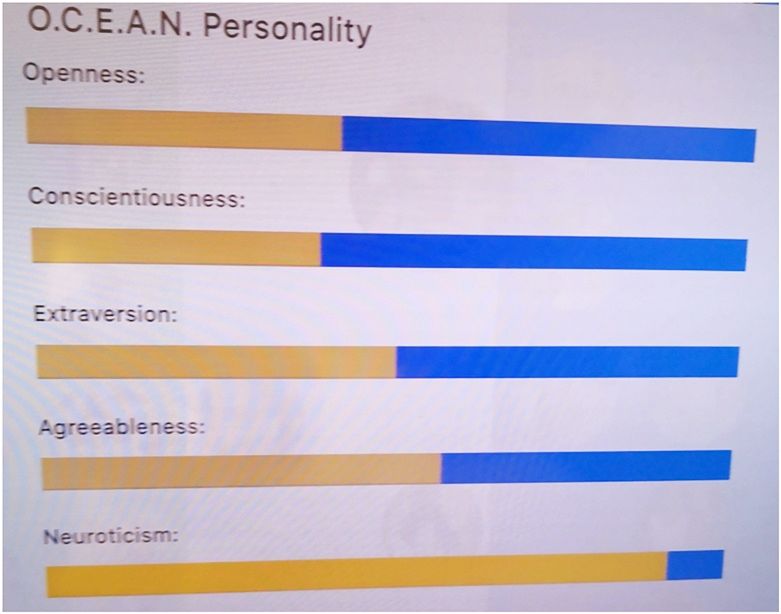
This is the portrait of a neurotic individual with limited qualities and highly targetable. There has been a lot of discussions within the academic world as to the efficacy of psychographic targeting, but it seems to have worked particularly well in the 2016 elections winning a mere total 80,000 votes difference in three crucial states. That really meant flipping 22000 votes in Pennsylvania, less than 6000 in Michigan and 14000 in Wisconsin. It was probably the combination of Trump’s negative messaging combined with Analytica’s sophisticated geographical targeting and the Wikileaks Clinton stolen emails timely release that did the trick. In addition, the novelty of the technology advantaged the Republican campaign.
Although the approach in 2020 was not as successful as in 2016, this technology, applied in combination with fake news, has radicalized a large portion of the Republican party, where 75% still believe that the elections were stolen! This has paralyzed most of the elected officials, scared of not being endorsed by their own party at the next elections. This in turn keeps the elected branch of government stuck on party lines and threaten the proper political process and the well being of the entire nation. It is bad news, and no doubt will keep the media busy!
By Digenis
7 March 2021
Read also: Social Media, Psychology and Politics