







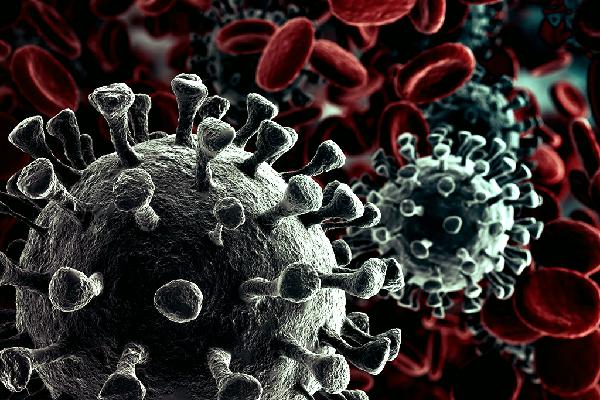
Covid-19 virus is an insidious invader that not only attacks primarily the respiratory system but also swoops trough the vascular system where it generates blood clots.
Viruses are infectious agents of small size and simple composition that can multiply only in living cells of animals, plants, or bacteria. All viruses contain a nucleic acid, either -DNA (deoxyribonucleic acid) or -RNA (ribonucleic acid), and several proteins. Viruses should not even be considered organisms since they are not free-living (i.e., they require a host cell), thus viruses need to elude the host immune defense to infect its cells in order to reproduce and survive.
Viruses are small sized infectious agents that are unable to replicate by themselves and require a host cell to multiply. They contain a nucleic acid in the form of either -DNA (deoxyribonucleic acid) or -RNA (ribonucleic acid), and several proteins. Their particular noxiousness is their ability to elude through certain mechanisms the host immune system and as they multiply at a faster rate than the capacity of the innate immune system to eliminate them. A large number multiplying in certain body cells that it has the ability to penetrate provokes severe disease that in some cases can be mortal We are all familiar with Chicken Pox, measles ,mumps or rubella which the eldest have contracted in their youths and the younger one have been vaccinated against. The seasonal flue is also a virus which we are familiar with and each vaccine with a partial effectiveness are produced partially limiting the mortalities of the most vulnerable persons. However, over a hundred years the Spanish flue pandemic killed over 50 Million people. Smallpox, a particularly dangerous virus which was first fought through the primitive Jenner vaccine has now been totally eradicated worldwide through extensive vaccination. More recently some new very dangerous viruses have appeared such as SARS, MERS, Ebola but have fortunately been extinguished. Towards the end of last year, an extremely dangerous virus SARS-COV-2 appeared in China where it was partially contained through draconian lockdown and control measures not seen in the West. However through the modern mobility facilitated by air travel the virus was able to travel to various regions of the world where it was met with measures ranging depending on the countries from rapid and organised to the greatest indifference until the epidemic degenerated into a catastrophic death toll comparable to large war casualties.
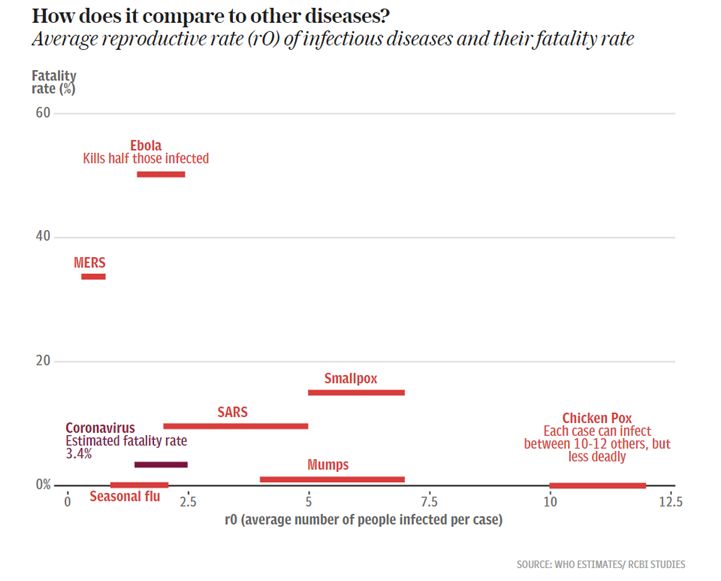
The picture blow gives a perspective as to the mortality and contagiousness of this virus as compared to others.
Initially, as a result of people collapsing in the street because of inability to breath sufficiently, pneumonias and the resulting deaths caused by Acute respiratory distress syndrome the existence of a new Coronavirus was detected, the name SARS-COV-2 was coined.
ARDS (Acute respiratory distress syndrome) is the result of an excessive inflammation of the capillary membrane of the alveoli in the lungs where the CO2 exhaust and the oxygen intake in the blood takes place. This results in the exudation of an edema fluid in the air spaces progressively diminishing the respiratory capacity of the patient.
Just as the original SARS-CoV virus, the SARS-CoV-2 is a β-coronavirus with a spike Glycoprotein S which has a high affinity for the angiotensin-converting enzyme 2 ACE 2 receptor. Identified during the SARS epidemic, the ACE2 is expressed on epithelial cells of the lung, tongue, kidney, heart, and liver and discovered more recently in the small intestine. In the lungs, the attachment of S glycoprotein to ACE2 can cause the loss of cilia, squamous metaplasia, and an increase in macrophages in the alveoli that cause diffuse alveolar damage to the lung.
According to reports US CDC, patients in China with no reported underlying medical conditions had an overall case fatality of 0.9%. Case fatality was higher for patients with co-morbidities, serious diseases that are likely to cause death within a few months or years. The risk factors were estimated to be 10.5% for those with cardiovascular disease, 7.3% for those with diabetes, and approximately 6% for those with chronic respiratory disease, or cancer. The sample at that time, given the relatively small number of cases reported (about 80,000) was to small to put an increased risk factor to hypertension or obesity.
In the US, the statistical approach was different. They would compare the actual deaths in each disease category with the normal death rate for that particular disease and reported the deaths of people of people afflicted by COVID-19. These were termed excess deaths due to COVID-19. Between March 1, 2020, and April 25, 2020, 65% excess deaths (56 246) (65%) were attributed to COVID-19.The 5 states with the most COVID-19 deaths experienced large proportional increases in deaths from non-respiratory underlying causes, including diabetes (96%), heart diseases (89%), Alzheimer disease (64%), and cerebrovascular diseases.
We did our own research using the National Center for Health Statistics website and found that in the “weekly counts of deaths by state and select causes”, 2019-2020 for the five most affected states namely New York, New Jersey, California , Illinois and Massachusetts, that up to the 20th of June there had been a total of 80226 deaths of which about 52% were due to multiple causes (co-morbidity) versus 48%% from COVID alone. This proportion was almost identical in each of the states.
There is consensus that taking in account differences in age and prevalence of underlying condition, the numbers reported in the US and China are very similar. It would appear that this disease is more than a pure respiratory disease and that the virus is insidious enough to find the most vulnerable parts of the body or systems of the individuals it infects.
Within its classical interpretation, its wide clinical spectrum ranged from asymptomatic benign form, to acute bilateral pneumonias requiring hospitalization and in the most extreme cases admission to intensive-care-units. As the patient is infected, its immune system responds first with through the innate immune system Some individuals have enough antibodies to neutralize the virus and quickly recover without or with minor apparent symptoms. For others, the symptoms are more extended, and they have to rely on their adaptive immune system to combat the infection. It is like a land battle where divisions of antibodies natural killer cells and killer T cells fight to death against a multiplying horde of viruses.
The COVID-19 virus is an insidious invader that not only attacks primarily the respiratory system where it can generate in extreme cases an excessive inflammation that cannot be repressed by the natural breaks of the regulatory arm of the immune system but also swoops trough the vascular system where it generates blood clots that impede the normal circulation and in some cases provoke strokes or heart attacks.
In cases where the immune system is defeated, the enemy is so strong that it generates an uncontrolled inflammation provoking a massive oedema. The lungs become so inundated with fluid that breathing becomes physically impossible. What is happening is that the patients’ immune system regulatory system gets out of sync and a storm of cytokine released as the immune system breaks are no longer operating. As we learnt in the article “the immune system” the first defense of the immune system is the inflammatory response which acts as a first defence and alarm system requesting the assistance of different cells of the innate system to combat the enemy and the call up off the adaptive system as a reinforcement . If under the stress of the battle, an uncontrolled and generalized inflammatory response develops unhampered by the break regulatory cytokines (called suppressive or tolerogenic in medical jargon) develops, it generally results in the failure of organs due to the simultaneous malfunction of several body systems. This failure of the regulatory part of the immune system is known as hyper-cytokinemia.
During the process, this fluid becomes a pool of culture for pathogens. The immune system no longer controls the bacteria within the lungs and infections develop. These patients are put into mechanical ventilation and given antibiotics and their chances of survival are limited especially if they have other underlying conditions.
Another pathogenesis has been ascribed to the extreme cases as it was noticed that COVID-19 patients had symptoms that went way beyond the respiratory system. During autopsies, the doctors observed that in addition to inflammation in blood vessels ferrying oxygen to various organs ,the presence of blood clots, damages to different organs and particularly they detected acute kidney failure, This has led to the hypothesis that the virus was attacking blood vessels. This confirms the vascular damage observed in the lungs which must account for a preponderant number of the fatal cases
For those that are interested we shall attempt as non-medical observers to look in more details at the paths and phases of these more extreme pathogenesis of COVID -19
| By Digenis | 9.7.2020 |